For air conditioning piping, should we choose copper or aluminum material?
Recently, due to the rise in copper prices, some customers who frequently purchase copper coils have started using aluminum tubes to replace copper tubes in order to control costs. So, is this solution feasible? Today, let's briefly analyze the differences between the two.
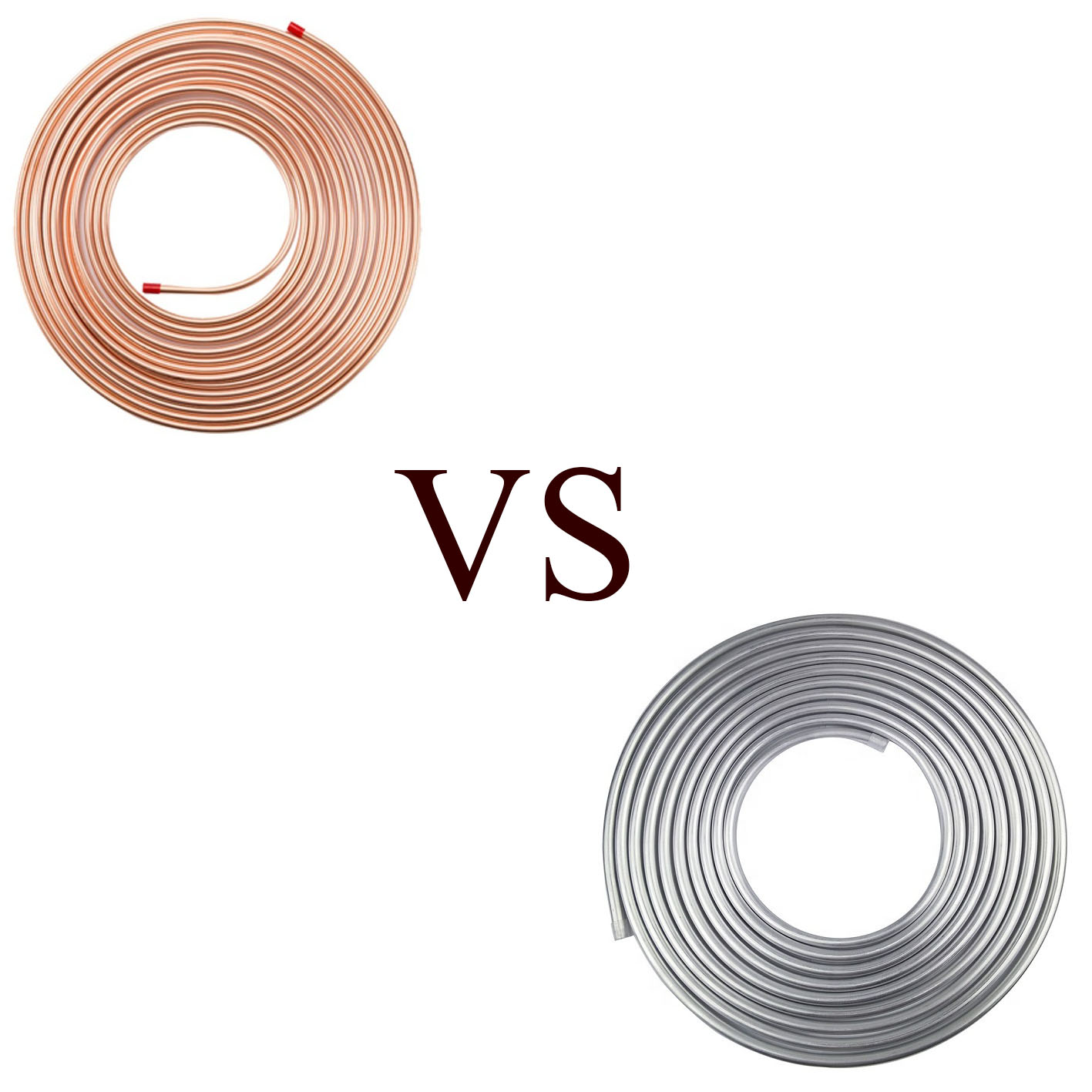
To help you understand more intuitively, I have organized their core differences into a table:
| Comparison dimensions | Copper Coil Tube | Aluminum Coil Tube |
| Thermal conductivity | Extremely strong. The thermal conductivity is about 401 W/(m·K), which is about 1.7 times that of aluminum. It cools and heats faster, and saves more electricity during long-term use. | Good. The thermal conductivity is approximately 237 W/(m·K). This can be compensated for by techniques such as increasing the heat exchange area or micro-channel design. |
| Durability and lifespan | Extremely long. Excellent corrosion resistance, toughness, and fatigue resistance. The normal service life can reach 15-20 years. | Medium. The material is relatively soft and prone to oxidation and corrosion, especially in humid or coastal environments. The typical service life is about 6-8 years, which can reach over 10 years after technical optimization. |
| Corrosion resistance | Excellent. It has strong resistance to harsh environments such as humidity and salt spray. | Poor. The main drawback is the high risk in coastal areas with high salt spray, humidity, and frequent rain. It requires additional protection such as anti-corrosion coatings. |
| Cost and price | High. The price of copper is about 3 times that of aluminum. The initial purchase cost of air conditioners using copper pipes is higher. | Low. The material cost advantage is significant; taking a 1.5 HP air conditioner as an example, it can save about 380 yuan in costs. The price of the complete unit is more competitive. |
| Maintenance and repair | Relatively easy. The process is mature, and welding and maintenance are relatively convenient. | It is quite difficult. The welding process requirements are high; once a leak occurs, the difficulty and cost of repair may be even higher. |
| Weight | Heavy. | Lightweight. Conducive to the lightweight design of air conditioner outdoor units. |
Copper Tube: Why Is It the Top Choice for "Long-Termism"?
Copper has become the "gold standard" in the air conditioning industry primarily due to its irreplaceable physical properties.
Superior performance: Copper's thermal conductivity far exceeds that of aluminum, enabling air conditioners to reach the set temperature more quickly and consume less electricity over time.
Durable and robust: Copper offers excellent corrosion resistance and fatigue strength, easily withstanding the harsh conditions of high-frequency compressor vibrations and repeated thermal cycling—key factors in ensuring stable air conditioner operation for 15 to 20 years.
Recommended for: If you plan to live long-term in coastal or other high-humidity, salt-rich environments, or if you want an air conditioner that can reliably last over 10 years, choosing copper tubing is a more secure investment.
Aluminum Coil Tubes: A Practical Choice Driven by Technological Advancement
"Replacing copper with aluminum" is not merely a cost-cutting measure, but rather a technological approach emerging from the national strategy of "using aluminum to conserve copper" and enterprises' need to reduce costs.
Significant cost advantage: Aluminum is much cheaper than copper, directly lowering air conditioner prices and making it highly attractive to budget-conscious consumers.
Technology is catching up: through micro-channel design to increase heat transfer area, rare-earth aluminum alloys to enhance base material performance, and corrosion-resistant processes such as zinc spraying and anodizing, the performance and service life of high-end aluminum tube air conditioners have significantly improved—reaching up to 10 years.
Ideal for: If you have a limited budget, live in a dry inland area, or are only renting short-term as a temporary solution, a branded aluminum tube air conditioner with clear material labeling and a 10-year warranty is indeed a cost-effective choice.
Summary and Purchase Recommendations
Overall, choosing the right coil comes down to a trade-off between "long-term stability" and "short-term affordability."
For long-term reliability, choose copper piping: a smart choice for most households, especially owner-occupied homes. Although the initial cost is slightly higher, it brings peace of mind and efficiency for decades to come.
For limited budgets or specific scenarios, choose aluminum ducts: Aluminum duct air conditioners are highly appealing for rental properties, temporary housing, or tight budget situations. However, be sure to stay vigilant when making your purchase:
Check the labeling: Require merchants to clearly indicate that the heat exchanger material is "aluminum."
Check the warranty: Prioritize brands that offer a 10-year or longer warranty for aluminum heat exchangers.
Consider the environment: Residents in coastal, humid areas should be cautious when choosing aluminum tubes and instead prefer copper tubes.
-
PRODUCTs
-

CONTACT US
Contact person:Judy
WhatsApp: 8618863509246
Email: Judy@sdtmtg.com
Add: Dongchang East Road, Liaocheng Economic and Technological Development Zone, Liaocheng, Shandong, China